
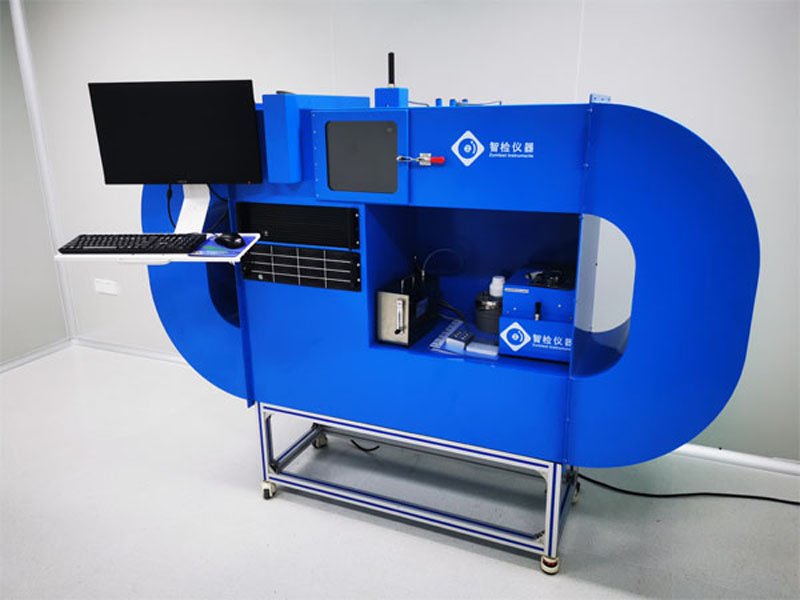
The Ultimate Guide to Smoke Tunnels: Precision Testing for Smoke Alarms and Detectors
A Smoke Tunnel (often referred to as a smoke box, wind tunnel, or aerosol test chamber) is a specialized piece of test equipment used to evaluate the performance and sensitivity of smoke alarms and smoke detectors. Unlike simple benchtop tests, a smoke tunnel provides a controlled, dynamic environment that simulates real-world fire conditions, ensuring that life-safety devices comply with rigorous international standards such as UL 268, EN 54, and ISO 7240.
Precision Measurement: The Obscuration Meter
At the heart of a high-quality smoke tunnel lies the Obscuration Meter. This critical component measures smoke density with extreme accuracy. In fire safety engineering, smoke density is measured in percent per foot (%/ft) or dB/m (decibels per meter). The obscuration meter quantifies how much light is blocked by the smoke particulates passing through the optical path. This allows engineers to precisely determine the exact threshold at which a smoke alarm triggers, ensuring that the detector is sensitive enough to catch a fire early but robust enough to avoid false alarms caused by nuisance sources like cooking or dust.
Controlled Aerosol Generation
To simulate a fire, the unit utilizes an Aerosol Generator. Unlike burning actual materials—which introduces variables and inconsistent byproducts—modern smoke tunnels use precision aerosol generators to create a consistent, repeatable smoke concentration. This ensures that every test yields scientifically comparable results, allowing manufacturers to fine-tune detector optics and sensitivity without environmental contamination.
Dynamic Airflow and Environmental Control
What sets a professional smoke tunnel apart from a static smoke box is its ability to simulate air movement and environmental extremes. The system is equipped with a Circulated Fan and a dedicated Exhausting Fan. The circulated fan allows for adjustable air speed, enabling technicians to test how a detector performs in drafty conditions (such as hallways or HVAC ducts) versus still-air environments. The exhausting fan ensures rapid clearing of the chamber between test cycles, significantly increasing throughput in a production or R&D setting.
Furthermore, to meet stringent certification requirements, the tunnel includes integrated Heat and Cold Functions. These allow the chamber to simulate extreme temperatures—from freezing conditions to high-heat environments—to verify that the detector’s sensitivity remains stable regardless of ambient temperature fluctuations.
Compliance and Application
This comprehensive design ensures that the smoke tunnel meets the standard requirements set by regulatory bodies. It is an indispensable tool for:
-
Manufacturing QA/QC: Verifying that every unit leaving the production line meets sensitivity thresholds.
-
Research & Development (R&D): Engineering new detectors with advanced photoelectric or ionization sensors.
-
Third-Party Testing Labs: Certifying products for UL, ETL, or VdS listings.
In summary, a smoke tunnel is more than just a test chamber; it is a sophisticated calibration and validation platform. By combining precise obscuration measurement, controlled aerosol generation, variable air speed, and thermal testing capabilities, it ensures that modern smoke detectors are reliable, accurate, and ready to save lives.